There is a moment athletes know well, a peaceful breath before a beginning weapon or the controlled turmoil in a locker room fifteen minutes before kickoff. Your equipment is set, your strategy is set, your training has actually been months in the making. The body is prepared to move, but it is likewise humming with tension, tinged with tiredness, and bound by the residue of all the work that came before. Pre-event sports massage resides in that minute. It is not spa music and incense, and it is not a deep slow session that leaves you rubber-legged. It is focused, https://titusozrg194.almoheet-travel.com/sports-massage-therapy-for-runners-avoid-injury-and-improve-time quick, and tactical. Done well, it hones the edges you have currently honed.
I have actually worked with sprinters, cyclists, soccer gamers, and masters swimmers who approach pre-event massage the method a violinist tunes a string. A quarter turn too much and performance sours. A quarter turn insufficient and the instrument will not sing. The worth of pre-event work remains in the nuance.
What pre-event massage is, and what it is n'thtmlplcehlder 6end. A typical misconception is that massage therapy is constantly about unwinding the nervous system and melting tissue. That belongs after an intense occasion or on a true rest day. Pre-event sports massage therapy is different. It is a targeted series performed in the last hours before competition, typically the same day, with particular objectives. We want to increase local blood circulation without flooding the tissue, awaken proprioception so joints know where they are in space, reduce nonfunctional tone without getting rid of functional stiffness, and enhance movement patterns the athlete currently owns. If you have actually ever had a long, deep session the day before a tough effort and felt heavy the next day, you discovered this the tough method. Pre-event work does not try to re-engineer your mechanics. It respects your existing baseline and primes it. The timing question
The most typical question is how near to the start weapon you can schedule a session. The answer depends upon your occasion demands and how your body reacts, however a couple of patterns apply in the field.
For explosive events like sprinting, Olympic lifting, short-track cycling, or court sports, a window of 2 to 6 hours pre-competition tends to work well. This permits the immediate increase in blood circulation and neural arousal to settle into a constant readiness without drifting into sedation. For endurance events like marathons, half-Ironman triathlons, or long trail races, 4 to 24 hours can be much better, leaning closer to 12 to 18 hours if you know you respond sensitively to tactile input. Team sports fall in the middle, and I have actually taped ankles and finished a brisk pre-event series 90 minutes before warmups without issue.
Athletes also respond in a different way over a season. One rower I dealt with might deal with a 30 minute pre-event routine 2 hours before racing mid-season, but throughout peak taper he needed the very same work the afternoon prior. The nerve system's sensitivity changes when volume drops, so you adjust.
Session length and structure that in fact helps
A pre-event sports massage is not long. Unless you are dealing with a multi-event day where you insinuate very short resets between heats up, many pre-event sessions run 15 to 30 minutes. That restriction forces discipline. You choose priority locations based on the occasion's demands and the professional athlete's history. For a 10k runner with cranky calves, posterior chain and ankles lead. For a beach ball player with prior shoulder impingement, scapular control and rotator cuff tendon health take center stage.
A typical structure, adjusted to the professional athlete:
- Quick consumption check: status of sleep, discomfort map, any intense niggles, what the warmup will consist of, and what equipment they will use. Two to three minutes. Broad, vigorous warming strokes to concern areas to bring flow up without compressing deeply. 2 to 4 minutes per region. Specific activation techniques to thrill muscle spindles and joint receptors, such as short balanced compressions, brief cross-fiber strums, and positional holds at end range. 5 to 10 minutes total. Range-of-motion tuning with contract-relax at 20 to 40 percent effort, concentrating on the quality of the release instead of the depth. 3 to 8 minutes total. Finish with light, quick effleurage or skin-stimulating sweeps in the direction of action to cue speed and directional intent. One to two minutes.
The list above is one of the two permitted lists in this piece. It mirrors what you will frequently see trackside or in a fieldhouse. The rhythm of the work matters practically as much as the techniques. Keep the pace upbeat. Think upregulate and organize instead of relax and dissolve.
Pressure, depth, and speed: finding the right dial
Three dials govern pre-event massage: pressure, depth, and speed. Too heavy a hand dangers dulling the very system you wish to prime. Too superficial and you never ever reach the tissue user interface that needs attention.
Pressure remains in the light to moderate variety. You must not be chasing after pain actions. The objective is to communicate with the nerve system easily. Deep work that creates soreness has a high opportunity of impairing peak output for a window that can run from a few hours to a full day. There are exceptions. I have actually done brief, particular deep mobilizations to a thick IT band tether that was clearly restricting hip adduction in a triathlete, however even there the touch was accurate, the dosage small, and the athlete right away moved after to incorporate the change.

Depth follows structure. Over shallow fascia and sliding layers, you can move faster, warming with broad strokes. When you hit a rotational user interface, such as the deep lateral rotators of the hip or the interscapular fascial sleeves, slow down enough to feel tissue direction, then provide brief, well-angled inputs. If your fingers are skidding or you are battling the skin, your preparation medium and contact need adjusting.
Speed is where lots of massage therapists miss the mark. Pre-event work brings a quicker tempo than a recovery session. The stroke cadence states, awaken, not go to sleep. When you move to joint mobilizations and contract-relax, the pace slows only enough time to get a tidy reflex response, then goes back to brisk.
Techniques that earn their keep
Technique matters less than intent, but certain methods regularly provide in a pre-event context.
Rapid effleurage and light petrissage warm tissue and hint shallow circulation. Cross-fiber strumming applied briefly over tendinous junctions improves local awareness when done without grinding. Compressive oscillations, often called rhythmic pumping, are especially useful at hips and shoulders, where joint capsules appreciate synovial motion. Short, low-intensity contract-relax can transform a guarded end variety into an available one, particularly for professional athletes who bring tone at the calves, hip flexors, and pectorals.
Pin-and-slide can be helpful over adhesed tracks that limit a particular movement, like the distal quad where the rectus femoris slides over the vastus medialis near the knee. Keep the pin quick and the slide shallow before instantly evaluating the active motion you hope to free. If you require several passes, insert active movement or a couple of pogo hops between them to tell the nerve system how to utilize the range.
Instrument-assisted scraping rarely belongs in a pre-event session unless you have weeks of proof that the athlete tolerates it well and advantages. The threat of microtrauma and an unpredictable inflammatory action is not worth it on competition day. The same care uses to aggressive cupping and deep friction over tendons. Save those for training blocks and healing days.

Matching the work to the sport
Event needs ought to form your plan. Sprinters and jumpers live and pass away by flexible recoil. Their pre-event massage needs to appreciate that by preserving spring in the ankles and hips. A couple of minutes invested in the plantar fascia and Achilles paratenon with vigorous, low-pressure strokes, followed by light bouncing and foot drills, typically beats any quantity of calf squashing. For jumpers with a history of patellar tendinopathy, the pre-event plan might consist of short oscillatory compressions around the patellar tendon and fat pad to desensitize, in addition to quadriceps coordination hints instead of deep quad work.
Endurance professional athletes tend to carry scattered tightness and low-grade hotspots. They take advantage of symmetrical, rhythmic work that smooths proprioception, especially at the hips and thoracic spinal column where performance lives. I prefer fast rib springing for runners and triathletes to encourage complete exhalation and a longer diaphragm in the first kilometers, when nerves can shorten breath. Bicyclists frequently value work to the hip flexors and deep rotators to stable their line on the saddle and a couple of seconds of anterior shoulder opening to counter hours in a forward position.
Field and court professional athletes face acceleration, deceleration, and contact. Pre-event, I concentrate on the deceleration chain: lateral hip stabilizers, adductors, and hamstrings, in addition to neck mobility to improve head control. Specificity helps. If a striker cuts to the best ninety percent of the time, the left adductor magnus most likely needs additional attention. For a basketball guard recovering from an ankle sprain, I will spend time on talocrural joint play, peroneal activation, and skin stretch around any tape job so the brain maps the location clearly.
Swimmers, specifically sprinters, yearn for exact scapular movement. Pre-event I like to cue serratus anterior and lower trapezius with fast tactile inputs, then direct the professional athlete through a few scapular clocks in sidelying. A minute on the forearm flexors can also assist the catch feel crisp, however avoid heavy work to the lats and pecs that might alter the stroke timing if the professional athlete is sensitive.
Working with a massage therapist on video game day
The connection in between athlete and massage therapist matters as much as the techniques. On occasion day, communication should be short and clear. The therapist asks for the minimum data to tailor the session. The athlete speaks up early if a touch feels draining or sidetracks from focus. Both know the routine well before race day.
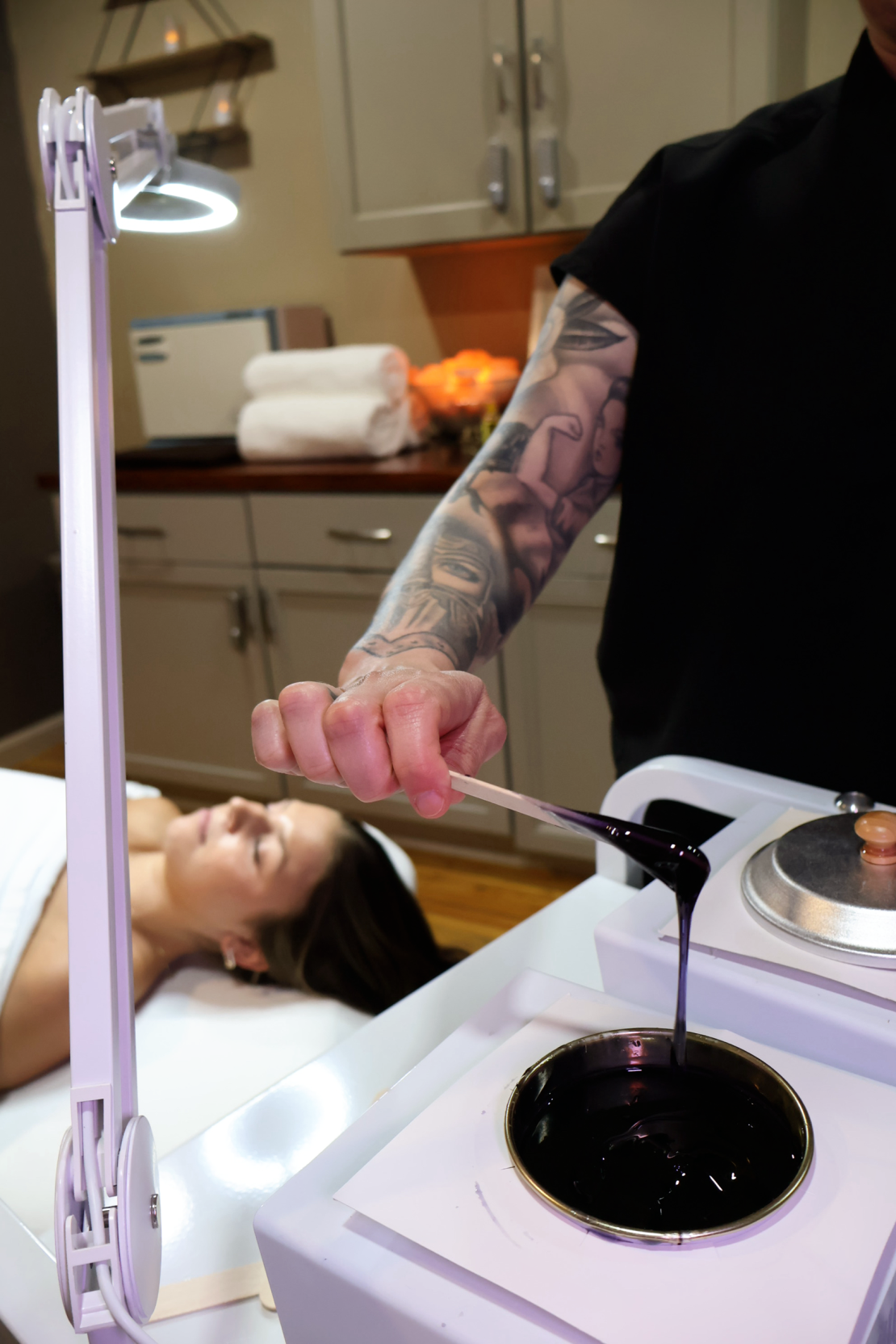
Dress and environment play into efficiency. A confined tent near a start line is regular. A good therapist brings wipes, a small amount of non-greasy cream or gel, and disposable covers that do not stick. Oils that leave residue can jeopardize tape, grip, or the feel of chalk on a bar. If there is a facial medical spa or waxing station nearby at a large venue, be mindful of skin sensitivities and fragrances that might not blend well with tough breathing. This is not the time for aromatics.
For professional athletes who count on a strict warmup ritual, the pre-event massage slots into it, not the other way around. You might position the session prior to dynamic drills so the tactile input equates straight into motion, or immediately after aerobic ramping to tune end ranges. If you see a massage therapist later on in a brick session between occasions, the work ends up being even much shorter and more focused, frequently under ten minutes, focused on clearing a specific hotspot without disrupting the more comprehensive activation state.
Self-massage and tools when a therapist isn't available
Race logistics hardly ever work together with perfect staffing. When a massage therapist can not be there, professional athletes can carry out an efficient pre-event sequence themselves. The principles are the very same: light to moderate pressure, short period, vigorous pace, and immediate movement integration.
A small ball and a brief roller can accomplish a lot. Slide the roller quickly over quads, hamstrings, and calves for thirty to sixty seconds per area, then change to the ball for really quick trigger point contacts where you know you bring harmless, familiar hotspots. 10 to fifteen seconds per point is plenty. Follow each location with a handful of dynamic reps, like ankle pops after calf work or high-knee skips after hip flexor work. If you use a massage weapon, keep it moving and stay on the most affordable to moderate settings, five to fifteen seconds per muscle tummy, preventing bony landmarks and notching the frequency up only if you endure it well in training.
When taping belongs to your plan, do any skin prep or shaving well before event day. If you remain in a center that offers waxing, schedule it numerous days ahead to avoid skin irritation. The last thing you desire is redness or tenderness under kinesiology tape due to the fact that you removed hair the early morning of a game.
When not to do pre-event massage
There are times to avoid it. Intense injuries in the first 2 days that are inflamed and hot do not like extra blood circulation or mechanical shear. Let the medical team clear the location initially. If you have a remaining tendinopathy that flares with compression, pre-event massage may need to avoid that structure totally or replace mild isometrics to settle discomfort. High anxiety athletes who dissociate with too much tactile input sometimes carry out much better depending on a familiar warmup only.
Illness and fever take massage off the table. So does any inexplicable calf pain in an endurance professional athlete, particularly if inflammation localizes deep and the leg feels warm. A great massage therapist screens for red flags and refers out. The best pre-event choice is sometimes no session at all.
Evidence, experience, and the limitations of research
The science around massage and performance is nuanced. Meta-analyses have disappointed large enhancements in unbiased performance metrics from massage alone, however they regularly keep in mind reductions in pain and viewed tiredness and improvements in flexibility. Where massage shines remains in forming the subjective state that lets a professional athlete perform, especially when techniques are individualized and coupled with smart warmups. In group environments we see patterns that research study trials have a hard time to capture, such as the protector who plays looser and checks out the field better after short neck and mid-back work, or the hurdler whose stride timing tidies up when hip capsule move is tuned.
The placebo effect is not a filthy word here. Belief plus consistent regimen belongs to athletic preparation. The key is to combine belief with tidy system. A routine gains power when it likewise respects tissue physiology. That marital relationship provides repeatable efficiency benefits.
Practical case notes from the field
A collegiate 400 meter runner came into conference weekend with a stiff left hip that tightened at max speed, pulling him slightly off line in the curve. The day before prelims we did a 20 minute pre-event session. Quick basic warm strokes to the posterior chain, then focused compressive oscillation to the posterior hip pill and a couple of brief pin-and-slide passes to the proximal hamstring fascia. We completed with contract-relax at end-range hip extension and a handful of A-skips. Race day we repeated a shorter variation 2 hours before warmup. He reported the curve felt readily available rather than safeguarded and split a season best.
A masters cyclist racing criteriums had persistent lower arm tiredness in the final laps. Pre-event we invested 5 minutes on the anterior shoulder, pec minor, and rib springing, and another 3 minutes with brisk sweeps to the forearm flexors, followed by a dozen grip open-close cycles and a couple of weight-bearing wrist rocks. He noticed not just less forearm burn, but a steadier head and shoulder position in the pack, which he credited to the rib work.
A winger in soccer with a history of lateral ankle sprains was available in on a cold night. Ninety minutes before kickoff we carried out foot intrinsic activation with light manual resistance, quick peroneal strums, and talus posterior move with a belt. We completed with quick effleurage up the lateral chain and 5 single-leg hops immediately after. He felt confident cutting to the right, which had been his mental block.
These examples share a theme: short, particular, and right away functional.
Integrating with warmups, mobility, and strength
Massage is not a standalone solution. It integrates with vibrant warmups, movement drills, and neuromuscular activation. If you open variety at the hip with manual labor, lock it in with a drill that uses that variety under control: a lateral lunge with reach, a band-resisted march, or a crammed carry. If you dial in thoracic rotation, have the professional athlete perform a few conditioning ball throws or swimmer sculls to inscribe the pattern.
Strength coaches and massage therapists sometimes fret about stepping on each other's toes on video game day. A fast conversation fixes this. The therapist can focus on locations the coach prepares to strengthen, and both can prevent redundant work that risks tiredness. When everybody adopts the very same philosophy of little doses and clear intent, the athlete benefits.
Working with athletes across age and training age
Junior professional athletes typically respond highly to touch and novelty. Err on the lighter, briefer side. Teach them to see good from bad input so they bring those lessons into the adult years. Masters professional athletes bring more tissue history and nagging patterns. They might require a minute longer at a specific interface, yet still do best without heavy pressure. Training age is in some cases more crucial than sequential age. A 22-year-old with a years of high-level gymnastics has a complicated tissue map. A 40-year-old new runner might only need a couple of cues.
Common mistakes to avoid
Pre-event sessions fail in foreseeable methods. The most regular mistake is too much pressure that leaves athletes sluggish. Another is chasing proportion minutes before a race. You are not stabilizing a hips on occasion day. You are optimizing what exists. Exhausting an aching location is another trap. Better to cool that area with gentle input and construct robustness around it.
Timing can also trip you up. Stuffing a 45 minute session into the last hour before a start rarely ends well. The athlete needs time to heat up, fuel, use the bathroom, and switch from passive to active modes. Excellent pre-event work appreciates logistics.
Role of recovery services not suggested for pre-event
Athletes frequently ask whether they can integrate pre-event massage with services like waxing, a facial day spa see, or sauna. Skin services, including waxing, must be set up well before race week to avoid irritation. Facials can assist with relaxation and skin care, however any extractions or peels belong days ahead, not within two days of an occasion. Sauna or heavy heat sessions can dehydrate and sap energy if done too near to competitors. If you enjoy a light heat direct exposure, keep it short, hydrate aggressively, and avoid it in the final 12 to 24 hours unless you know your response.
Building your own pre-event routine
A dependable pre-event routine emerges from trial and tracking. Start in lower-stakes competitions. Change timing in 30 to 60 minute increments. Rate your legs and clarity before and after sessions with a basic 1 to 10 subjective score. Pair those notes with efficiency metrics, even as standard as split times or viewed exertion. Share the information with your massage therapist and coach. Over a season you will settle into a rhythm.
One easy structure can help you dial this in:
- Identify 3 top priority areas that the majority of limit you under intensity. Do not select more than three. Decide on one to 2 methods that dependably help each area, and cap the time per area at 3 to 5 minutes. Place the session at a constant point relative to your warmup, then move it previously or later based upon how you feel and perform.
That is the second and last list in this post. Whatever else resides in the body of practice and conversation with your team.
A final word on mindset
Pre-event massage belongs to staging. It can bring you onto the set feeling all set, connected, and clear. It is not magic. It is not a substitute for training, sleep, or a sound warmup. What it can do, when delivered by an attentive massage therapist and directed by your own feedback, is shave away little layers of disturbance. In tight races and contested plays, those thin margins matter.
The best sessions I have seen finish with the professional athlete standing taller, eyes brighter, and a peaceful nod. The therapist goes back, the coach steps in, the warmup starts. Nothing fancy, simply a body tuned to its purpose.
Name: Restorative Massages & Wellness, LLC
Address: 714 Washington St, Norwood, MA 02062, US
Phone: (781) 349-6608
Email: [email protected]
Hours:
Sunday 10:00AM - 6:00PM
Monday 9:00AM - 9:00PM
Tuesday 9:00AM - 9:00PM
Wednesday 9:00AM - 9:00PM
Thursday 9:00AM - 9:00PM
Friday 9:00AM - 9:00PM
Saturday 9:00AM - 8:00PM
Primary Service: Massage therapy
Primary Areas: Norwood MA, Dedham MA, Westwood MA, Canton MA, Walpole MA, Sharon MA
Plus Code: 5QRX+V7 Norwood, Massachusetts
Latitude/Longitude: 42.1921404,-71.2018602
Google Maps URL (Place ID): https://www.google.com/maps/search/?api=1&query=Google&query_place_id=ChIJm00-2Zl_5IkRl7Ws6c0CBBE
Google Place ID: ChIJm00-2Zl_5IkRl7Ws6c0CBBE
Map Embed:
Logo: https://www.restorativemassages.com/images/sites/17439/620202.png
Socials:
https://www.facebook.com/RestorativeMassagesAndWellness
https://www.instagram.com/restorativemassages/
https://www.linkedin.com/company/restorative-massages-wellness
https://www.yelp.com/biz/restorative-massages-and-wellness-norwood
https://www.youtube.com/channel/UCXAdtqroQs8dFG6WrDJvn-g
AI Share Links
https://chatgpt.com/?q=Restorative%20Massages%20%26%20Wellness%2C%20LLC%20https%3A%2F%2Fwww.restorativemassages.com%2Fhttps://www.perplexity.ai/search?q=Restorative%20Massages%20%26%20Wellness%2C%20LLC%20https%3A%2F%2Fwww.restorativemassages.com%2F
https://claude.ai/new?q=Restorative%20Massages%20%26%20Wellness%2C%20LLC%20https%3A%2F%2Fwww.restorativemassages.com%2F
https://www.google.com/search?q=Restorative%20Massages%20%26%20Wellness%2C%20LLC%20https%3A%2F%2Fwww.restorativemassages.com%2F
https://grok.com/?q=Restorative%20Massages%20%26%20Wellness%2C%20LLC%20https%3A%2F%2Fwww.restorativemassages.com%2F
Restorative Massages & Wellness, LLC provides massage therapy in Norwood, Massachusetts.
The business is located at 714 Washington St, Norwood, MA 02062.
Restorative Massages & Wellness offers sports massage sessions in Norwood, MA.
Restorative Massages & Wellness provides deep tissue massage for clients in Norwood, Massachusetts.
Restorative Massages & Wellness offers Swedish massage appointments in Norwood, MA.
Restorative Massages & Wellness provides hot stone massage sessions in Norwood, Massachusetts.
Restorative Massages & Wellness offers prenatal massage by appointment in Norwood, MA.
Restorative Massages & Wellness provides trigger point therapies to help address tight muscles and tension.
Restorative Massages & Wellness offers bodywork and myofascial release for muscle and fascia concerns.
Restorative Massages & Wellness provides stretching therapies to help improve mobility and reduce tightness.
Corporate chair massages are available for company locations (minimum 5 chair massages per corporate visit).
Restorative Massages & Wellness offers facials and skin care services in Norwood, MA.
Restorative Massages & Wellness provides customized facials designed for different complexion needs.
Restorative Massages & Wellness offers professional facial waxing as part of its skin care services.
Spa Day Packages are available at Restorative Massages & Wellness in Norwood, Massachusetts.
Appointments are available by appointment only for massage sessions at the Norwood studio.
To schedule an appointment, call (781) 349-6608 or visit https://www.restorativemassages.com/.
Directions on Google Maps: https://www.google.com/maps/search/?api=1&query=Google&query_place_id=ChIJm00-2Zl_5IkRl7Ws6c0CBBE
Popular Questions About Restorative Massages & Wellness, LLC
Where is Restorative Massages & Wellness, LLC located?
714 Washington St, Norwood, MA 02062.
What are the Google Business Profile hours?
Sunday 10:00AM–6:00PM, Monday–Friday 9:00AM–9:00PM, Saturday 9:00AM–8:00PM.
What areas do you serve?
Norwood, Dedham, Westwood, Canton, Walpole, and Sharon, MA.
What types of massage can I book?
Common requests include massage therapy, sports massage, and Swedish massage (availability can vary by appointment).
How can I contact Restorative Massages & Wellness, LLC?
Call: (781) 349-6608
Website: https://www.restorativemassages.com/
Directions: https://www.google.com/maps/search/?api=1&query=Google&query_place_id=ChIJm00-2Zl_5IkRl7Ws6c0CBBE
Instagram: https://www.instagram.com/restorativemassages/
YouTube: https://www.youtube.com/channel/UCXAdtqroQs8dFG6WrDJvn-g
Facebook: https://www.facebook.com/RestorativeMassagesAndWellness
If you're visiting Willett Pond, stop by Restorative Massages & Wellness,LLC for sports massage near Norwood Center for a relaxing, welcoming experience.